




Be the first to comment








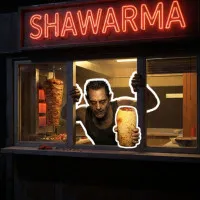
Scary Shawarma Kiosk: The Anomaly is a horror adventure game that disguises itself as a quiet night-shift simulator. You play as a lone worker assigned to run a roadside shawarma kiosk after dark, where your only mission sounds simple on paper: serve customers correctly, follow the rules, and survive until morning. At the beginning, everything feels normal. The grill is hot, orders are straightforward, and the road outside is silent. But as the night drags on, customers begin to act strangely. Some look wrong. Some behave in ways that don’t make sense. And some are not human at all. The rules posted inside the kiosk start to feel less like instructions and more like warnings left behind by someone who didn’t survive the shift.
Your task is not to fight or escape, but to observe carefully, make the right decisions under pressure, and never ignore the rules. One wrong order, one missed detail, or one moment of hesitation can invite an anomaly to cross the counter, and once that happens, the night rarely ends well. Step behind the counter, trust your instincts, and see if you can survive the night shift in this game now!
This is not a chase-heavy horror game. The fear in Scary Shawarma Kiosk: The anomaly comes from responsibility and observation. You run a roadside shawarma stand during night hours. Your tasks are deceptively simple:
While working, you must constantly monitor customers, the environment, and the rule sheet posted inside the kiosk.
The rules are not suggestions. They are survival conditions.
They tell you:
Some rules feel disturbingly specific because something has already gone wrong before you arrived. Breaking a rule doesn’t always kill you instantly. Sometimes, it lets something else slip inside the night.
The true threat comes from anomalies, entities pretending to be ordinary people. They may reveal themselves through:
The game never labels them clearly. You must decide whether someone is just strange… or dangerously wrong. Serve the wrong customer, and the night begins to unravel.
A key survival tool is the CCTV system, showing front and rear views of the kiosk with night vision.
Warning signs include:
Every check costs time. Every delay increases pressure. You are always choosing between speed and safety.
Each night follows the same structure but never feels the same. As nights progress:
What once felt manageable becomes exhausting. Familiar routines stop being comforting. The kiosk begins to feel like a controlled experiment, and you are part of it.
Simple controls, unforgiving outcomes.