






Be the first to comment






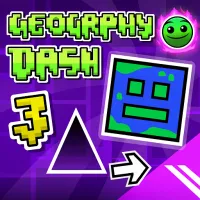
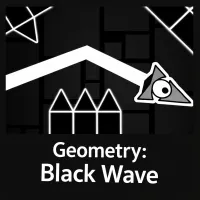
Geography Dash 3 delivers an unforgiving rhythm-driven platform challenge built for players who crave speed and accuracy. As the final chapter in the Geography Dash series, the game pushes intensity to its limits with tighter obstacle patterns, faster transitions, and zero room for hesitation. Every run feels like a high-stakes trial. Momentum never slows, and survival depends on reading the rhythm, memorizing layouts, and committing to each jump with confidence. This is not a game about luck. It is about mastery through repetition. Ready to play now!
Gameplay centers on guiding a geometric icon through high-speed sequences synced to energetic beats. Movement is automatic, leaving you responsible only for perfectly timed jumps and gravity shifts. Obstacle patterns evolve constantly. Some sections demand lightning-fast clicks, while others require carefully held jumps to clear narrow spaces. Portals flip gravity, alter direction, or change pacing instantly, forcing players to adapt without warning. Failure resets the run immediately, but frequent checkpoints allow you to refine difficult segments and learn the flow without breaking immersion. Progress comes from understanding the rhythm, not reacting blindly.
Unlike slower platformers, Geography Dash 3 offers no safe moments. There are no pauses to reset your focus. The cube keeps moving, the beat keeps pushing forward, and checkpoints only reward consistent execution. This constant pressure tests not only reflexes but also mental endurance. As the level progresses, the margin for error becomes thinner. Jumps must be clean. Timing must align perfectly with the music. The game turns into a battle of focus, where losing concentration for a split second means starting over.
Controls are deliberately minimal, making every action meaningful.
Geography Dash 3 is not difficult because of complicated controls. It is hard because it never allows hesitation. From the very first second, the level moves at high speed, forcing players to commit to every jump without second-guessing. One late reaction or early click is enough to end the run instantly. The Easy Demon rating might sound forgiving, but the design proves otherwise. Obstacles are placed close together, patterns shift rapidly, and gravity changes appear when you least expect them. The game demands precise rhythm reading rather than visual reaction, making every mistake feel earned rather than random.